High Line:
- The Nihangnamah is a still extant 1600s Deccani dueling manual
- It’s precise location is known in Delhi
- It is uniquely Indian and uses region specific weapons
- These are the largest collection of images available of it online.
Main Article
When I first began this project on Historic South Asian Martial Arts, I was told something which I knew to be untrue: India doesn’t have texts, it has living traditions.
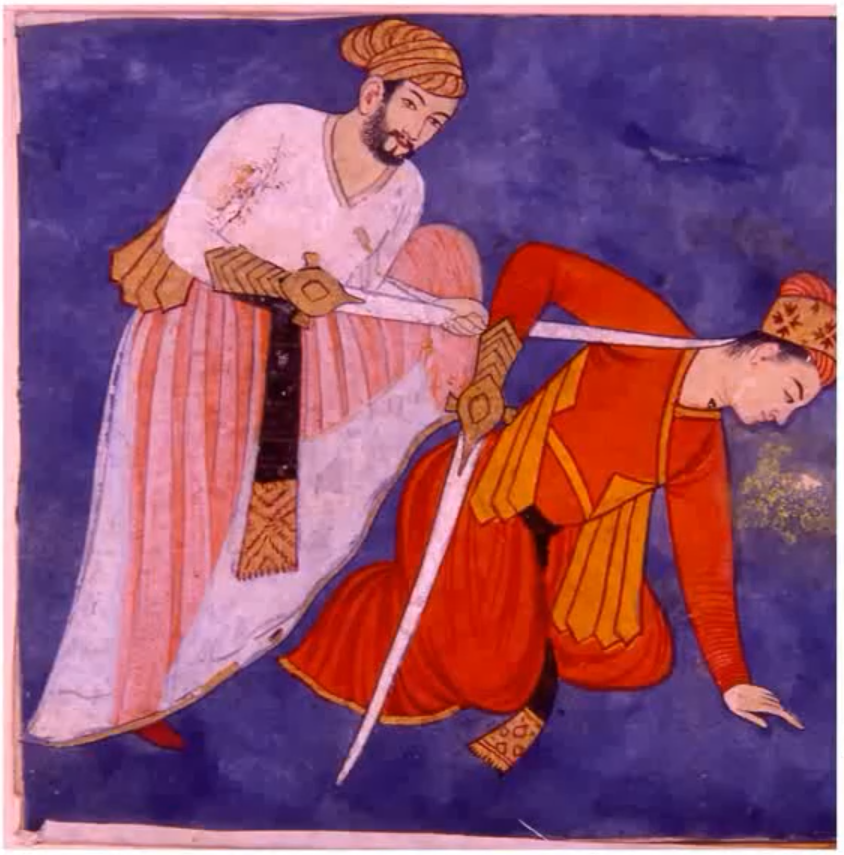
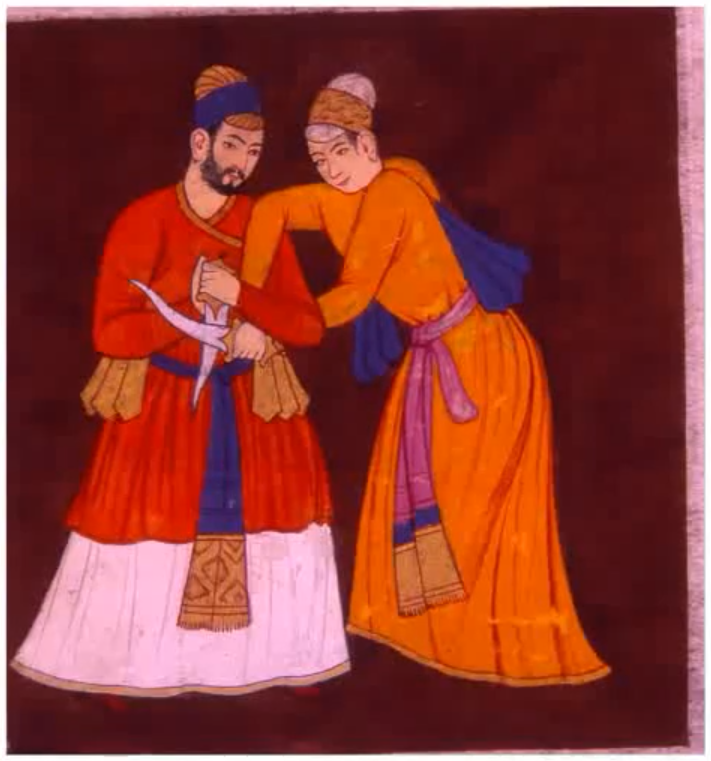
I present to you the first and most elusive in a series of historic texts to be discussed: the Nihangnamah, a dueling manual of the Deccani courts, an incomplete yet beautifully illustrated and compelling text.
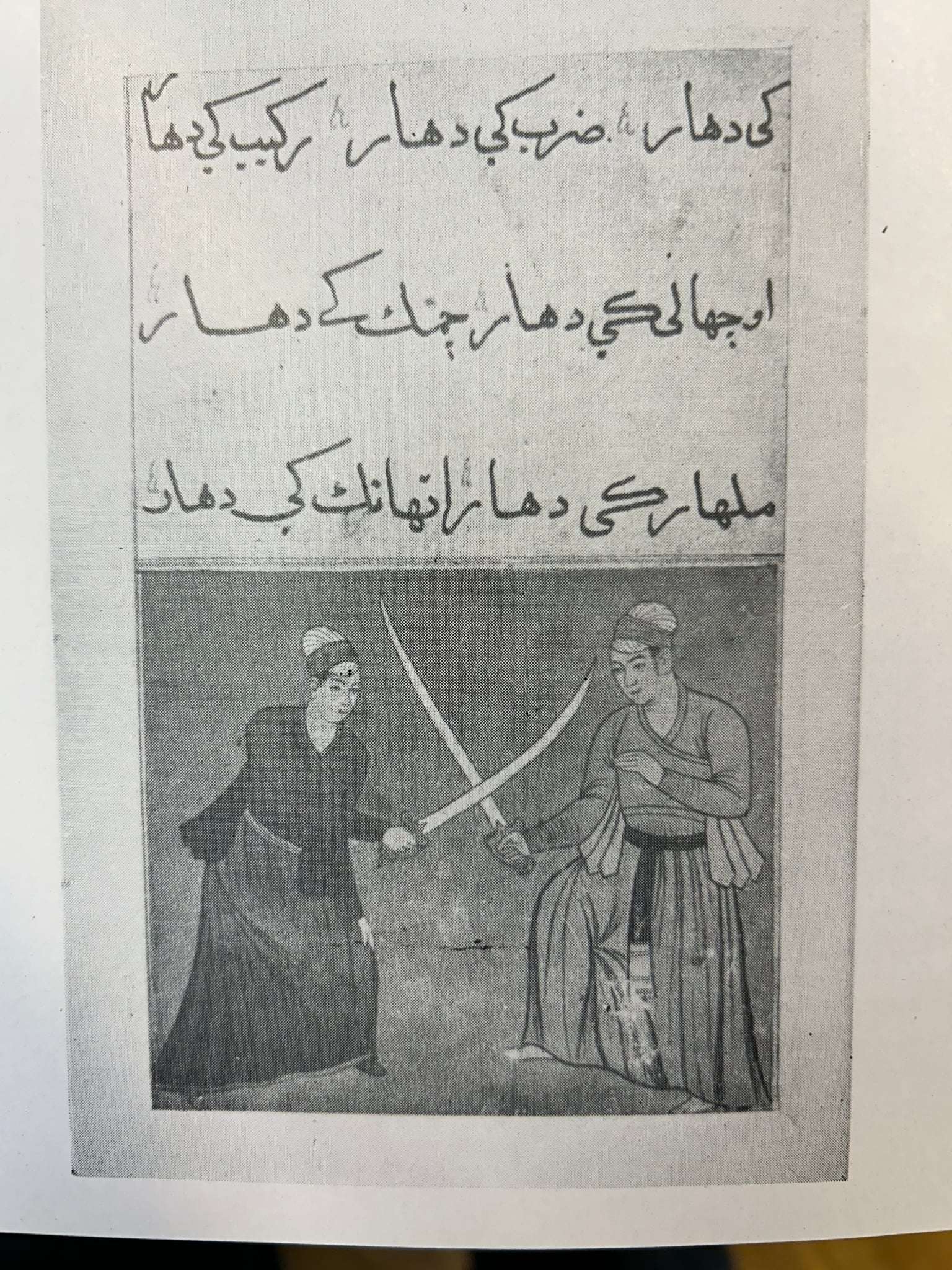
Our earliest glimpse at this text comes in GN Pant’s “Indian Arms and Armour. Volume II” (1980) (see gallery).
“The most important manuscript, exclusively devoted to the sword, is Nihang-Nama (the Book of the Sword) of Deccan. A few inscribed and illustrated leaves of this manuscript, datable to the 18th century A.D., are preserved in the National Museum, New Delhi. Holding the sword in upright hand and its brandishing, attacking the enemy, defending oneself from the enemy strokes, standing poses, modes of wielding the sword, etc., have very minutely been illustrated.” – Pant, Gayatri Nath, Indian Arms and Armour. Volume II (Swords and Daggers) (New Delhi: Army Educational Stores, 1980), p. 19.
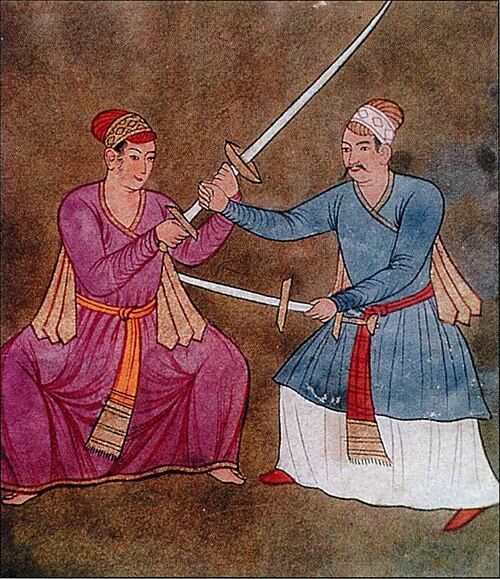
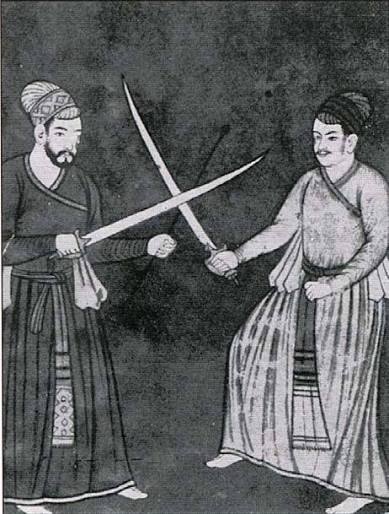
However E. Flatts has obtained a more recent viewing and was able to describe the location and attribution as: Anonymous, Nihangnamah, No. 141228-141231, Indian Miniature Paintings section, National Museum of India, Delhi. Pictures purchased from M. Ashraf, Hyderabad (1958?). the mounts given an attribution to both Bijapur and Ahmednagar c1625.
Flatts describes the text accompanying the images (some on the back) as “fragments list a series of postures, tricks and moves of various martial arts by name without further details”
“branded with a torch, the kick of contempt, the loin cloth on the ground, the loin cloth crushed under two feet, the sword in hand“
Nihangnamah, 58.32/10 (Unknown which obtained image this relates to)
“the wrestler: a blow with one hand, a blow with both hands, a blow to the breast, a royal blow, an upper blow, a concealed blow.“
Nihangnamah, 141229, 58.32/2 (Unknown which obtained image this relates to)
Unfortunately, this and the text from the GN Pant image is all we have through online sleuthing!
But let us speculate: I believe the work is a duelling manual, likely commissioned by someone of the upper classes as these kinds of artworks were very expensive.
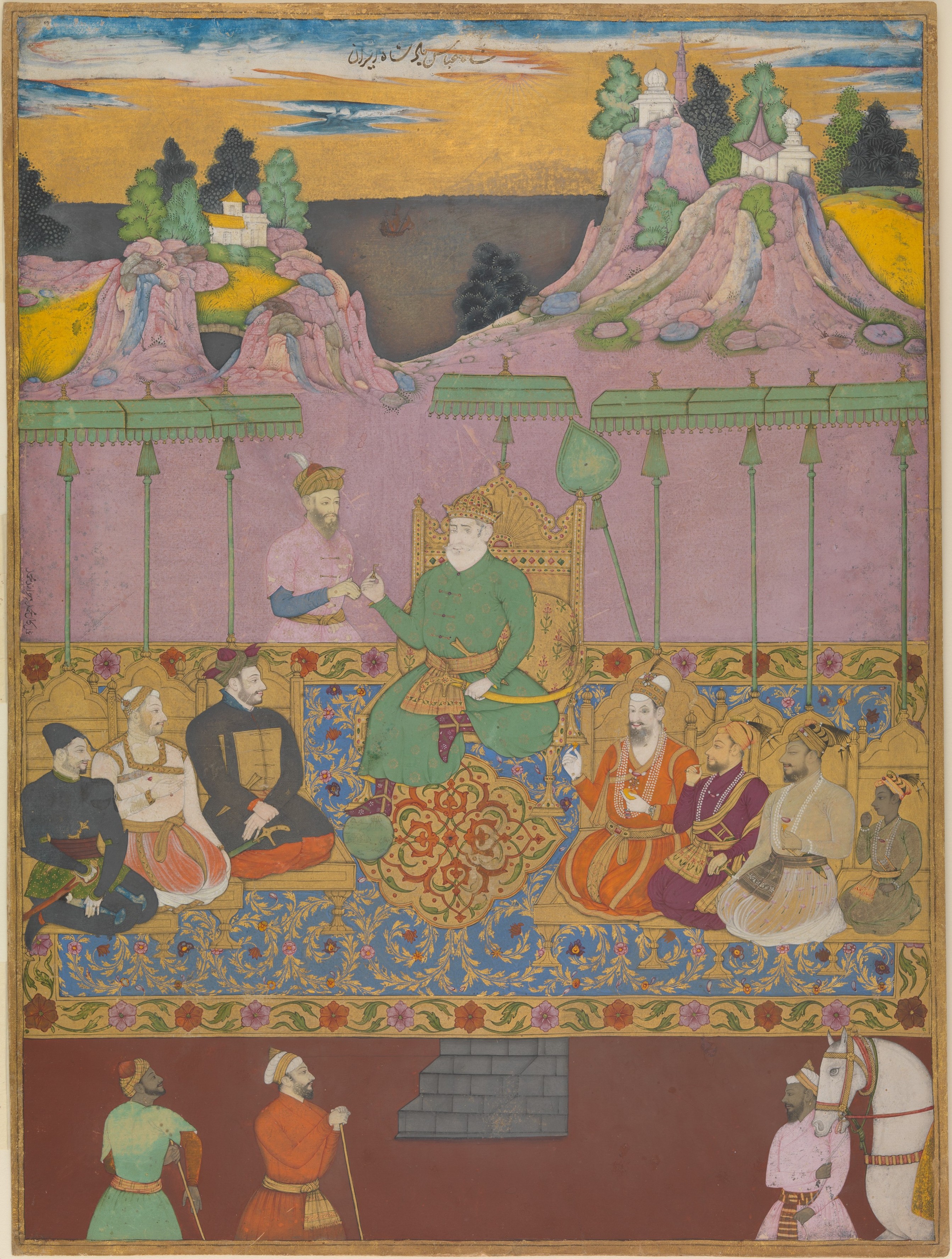
As Flatt’s describes in their fantastic “The Courts of The Deccan Sultanates – Living Well in The Persian Cosmopolis”; the persianate courts of Deccani Sultantes believed heavily in ideas of Javanmardi (persianate chivalry/honour).
How we know this is likely a duelling manual:
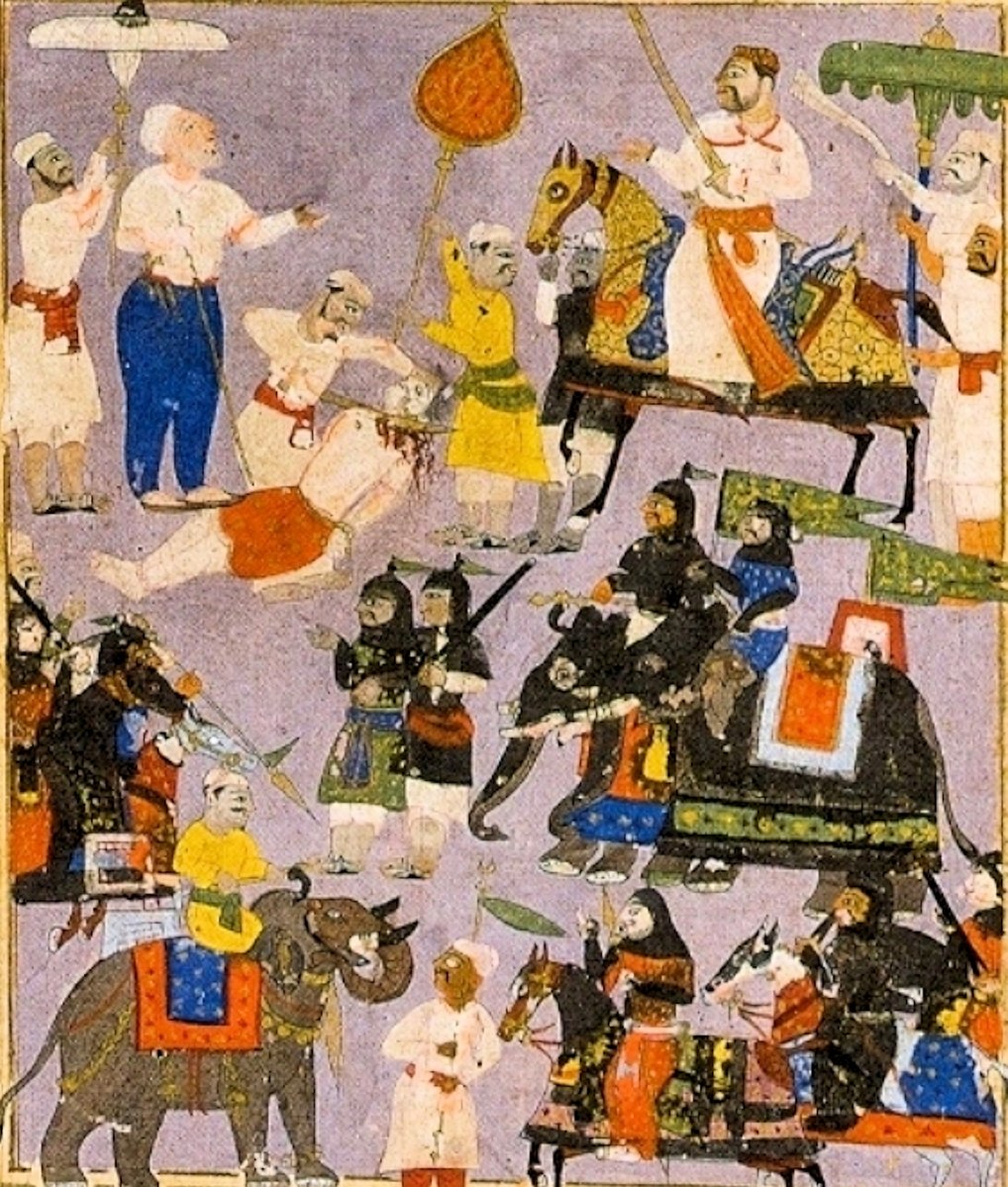
- Single combat: Other images from the Deccan Sultanates of battles show multiple opponents (see Figure 1).
- No horses: Other images from the Deccan Sultanates of battles show the heavy use of cavalry, valued by persianate cultures (Fig 1).
- No environmental backgrounds: Other images from the Deccan Sultanates of battles show environmental backgrounds, the Nihangnamah instead does not give a place or setting to draw the viewer into the technique of the 2 combatants (Fig 1).
- No death: The techniques do not end in bloodshed which other depictions do not shy away from (Fig 1).
- Everyone is smiling: the faces look playful rather than engaged in life or death struggle (Fig 1).
- Courtly dress: Rather that armoured combatants, we see courtly dress akin to that worn by kings (Fig 2).
- Ferishta, also from Bijapur and Ahmednagar in the same time period, writes and complains of a dueling craze that has gripped the young men of the courts. The duels are called yekang bazi (mutually intelligible with Hindustani “ek ang”/”one limb play” as Fazl in Ain-i-Akbar refers to 1 handed fighters as yak’hath), indicating single weapon duels used by each baz (player) and often neglect other forms of martial practice like riding and archery to instead practice their swordsmanship.
It is interesting to note that aligning with the premise of Flatt’s book: many of the weapons depicted are not Persian but Indian and uniquely Deccani Indo-Islamic weapons. We will likely do a series delving into the use of each of these weapons and their history but we see:
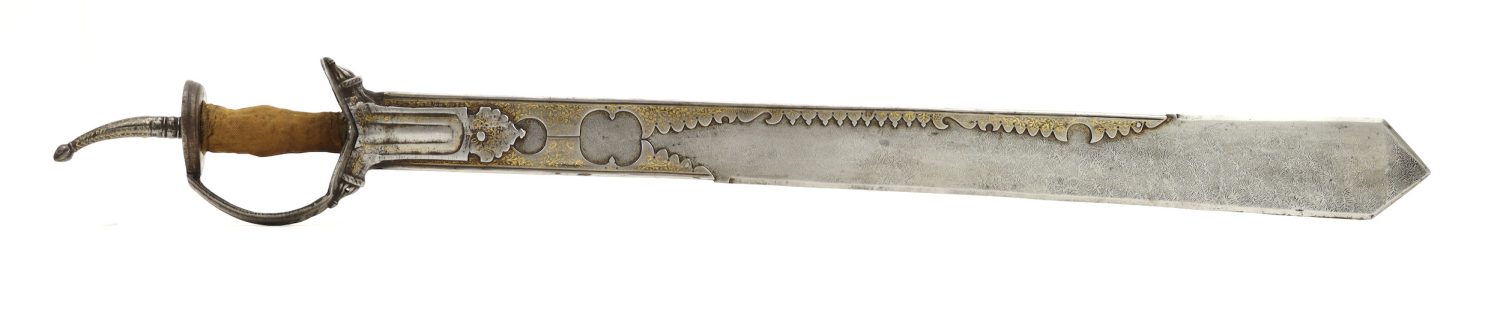
- The Indo-Muslim hilted Talwar (rather than the persianate Shamsheer)
- The Dand Pata gaunlet sword
- A Bank/Chilanum/Khanjar dagger
- A Gurz mace (painted in way identifiable only in comparison to other Mughal paintings)
- A “Mel Puttah Bemoh”/Bana (etymology for another discussion)
The information available online about this text rather incomplete: Indeed! Only a trip to New Delhi would suffice! or the National Museum completing it’s digitisation! or even a response from Dr Flatts, who may have more images!
Will you be interpreting it? Yes! We have extant manuals from other periods that inform us on both Persian and later north-to-central Indian martial arts that can aid our interpretation as we get more context in study.
To learn more about the unique Deccani courtly culture of this time, watch Flatt’s video below and consider buying their fantastic book “The Courts of the Deccan Sultanates: Living Well in the Persian Cosmopolis.“:
References:
Fazl, A. (1873) The Ain-i-Akbari, trans. H. Blochmann, ed. D.C. Phillott, rev. 2nd edn, Asiatic Society of Bengal, Calcutta.
Ferishta, MK. (1909) History of the rise of the Mahomedan power in India, till the year A.D. 1612, trans John Briggs.
Flatts E. (2019) The Courts of the Deccan Sultanates: Living Well in the Persian Cosmopolis. Cambridge University Press.
Pant, GN. (1980) Indian Arms and Armour. Volume II (Swords and Daggers). New Delhi: Army Educational Stores, p. 19.
 HSAMA.ORG : Historic South Asian Martial Arts